
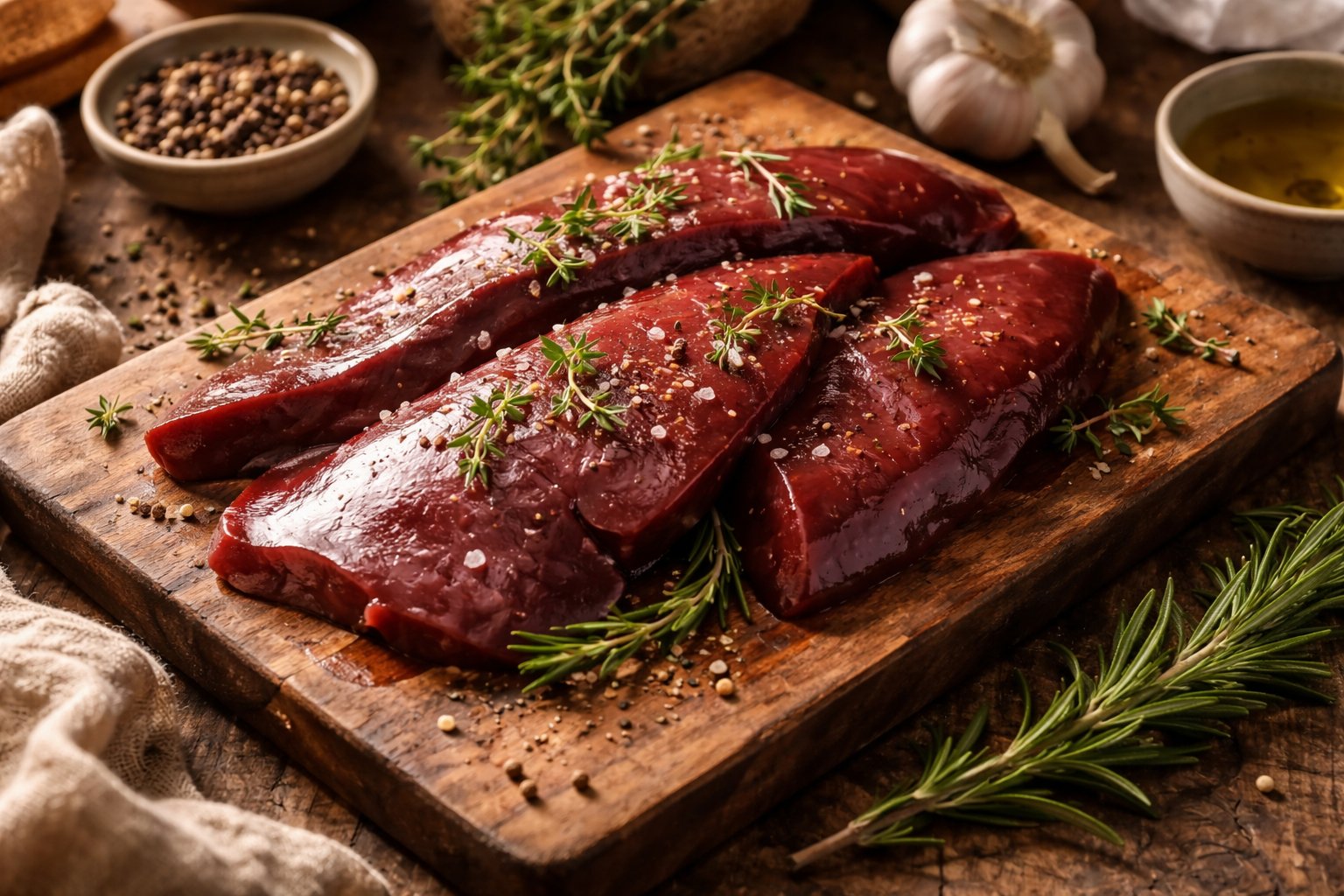
Is Liver Safe During Pregnancy? (Yes — Here's Why)
Have you been told to avoid liver during pregnancy?
I get it. The warnings are everywhere. "Don't eat liver because too much vitamin A can cause birth defects." That's enough to make you fear it!
But here's the part of the picture most people don't know: the fear around liver is based on synthetic vitamin A supplements, not actual food. And there's a huge difference between the two.
Let me explain why liver isn't just safe during pregnancy - it's actually one of the most beneficial foods you can eat.
Where did the fear come from?
Back in 1995, a study made headlines linking high vitamin A intake to birth defects. Doctors panicked. Guidelines were issued. And liver - nature's most concentrated source of vitamin A - got thrown under the bus.
The problem? That study didn't distinguish between synthetic vitamin A (the kind in supplements) and naturally occurring vitamin A (the kind in food). But this matters, a lot! Because they aren't the same compound.
Here's what the research actually shows:
Over a 30-year period, fewer than 20 cases of birth defects were attributed to vitamin A — and none of them were linked to eating liver. Not a single one.
For perspective, around 4,500 babies are born with significant birth defects in Australia every year. If liver were genuinely dangerous, we'd see it in the data. But we don't.
Food vs supplements: why it matters
Ok so this is the bit that I really want to help you understand.
Your body processes vitamin A from food completely differently to vitamin A from supplements. When researchers compared fried calf liver to vitamin A supplements, they found the supplements led to much higher concentrations of the specific metabolite linked to birth defects. And guess what, liver didn't have the same effect at all.
Their conclusion was pretty clear: "Advice to pregnant women on the consumption of liver based on the reported teratogenicity of vitamin A supplements should be reconsidered." (Teratogenicity is a fancy word meaning 'causes birth defects').
The synthetic forms to avoid have names like retinyl palmitate or retinyl acetate — you'll find these in fortified foods and supplements. If it has "retinyl" in the name, I'd steer clear of it entirely.
But vitamin A from liver, cod liver oil, egg yolks and butter? Your amazing body knows exactly what to do with it!
What about the "safe upper limit"?
You might have heard that 10,000 IU is the maximum safe amount during pregnancy. Well, it gets interesting there too….
One major study of over 25,000 births found that vitamin A intake up to 40,000 IU daily was actually associated with a lower risk of birth defects. Not higher. Lower!
And here's something else that rarely gets mentioned: birth defects caused by low vitamin A intake are more common than those caused by high intake. Congenital Diaphragmatic Hernia, for example, occurs in 1 in every 2,500 live births and is associated with vitamin A deficiency.
So the real question isn't "am I getting too much?" — it's "am I getting enough?"
Why liver is actually incredible for pregnancy
Liver isn't just "fine" to eat. It's genuinely one of the most nutrient-dense foods on the planet. Traditional cultures knew this — they specifically reserved organ meats for pregnant women and those trying to conceive. We can always learn from the women who went before us.
Here's what's packed into 100g of beef liver:
Look at that B12 number! Just a small serve of liver gives you more than 27 times your daily requirement. And unlike synthetic folic acid, the folate in liver is the natural form your body actually knows how to use. (If you're confused about the difference, read my post on folate vs folic acid here.)
Vitamin A from liver is specifically needed for your baby's heart, lungs, central nervous system, eyes, kidneys, dental arch and spinal cord. It literally signals to cells what type of cells they need to become and when organs should develop – isn't that amazing!
Liver isn't something to avoid, it's something to prioritise.
How much should you eat?
This recommendation comes from my course (The MAMA Diet) and aligns with what several leading prenatal nutrition experts suggest:
Lily Nichols, Registered Dietitian and author of Real Food for Pregnancy, recommends 3-6 ounces (85-170g) of liver weekly for pregnant women. The Weston A Price Foundation recommends 3-8 ounces weekly plus cod liver oil. Chris Masterjohn PhD, a vitamin A researcher, considers liver once or twice a week perfectly safe. And Dr. Cate Shanahan, author of Deep Nutrition, lists organ meats as one of her "Four Pillars" — essential for producing healthy children.
So my recommendation? Aim for 100-150g of liver per week (roughly 3-5 ounces). That's it.
You don't need to eat it every day — spreading it across the week is perfectly fine. And that amount keeps you well within safe vitamin A limits. Here's the maths: at 100-150g per week, you're averaging only 2,000-4,000 IU of vitamin A per day from liver. The research shows that even 10,000 IU daily doesn't present concerns, and one major study of over 25,000 births found intakes up to 40,000 IU were associated with lower birth defect risk. You're nowhere near any threshold to worry about.
But what if you hate the taste?
I hear you. Liver isn't exactly delicious and most people have a little shiver at the thought of eating it.
But I have good news: you don't have to eat it pan-fried with onions (unless you want to) because there are so many ways to sneak it into your diet.
Pâté is the gateway drug. When liver is blended with lots of butter, herbs and red wine vinegar, it transforms into something genuinely delicious. Spread it on sourdough, add it to a cheese board. You'll forget it's liver. Oh and my not so secret tip for beginners is to blend boiled eggs into your pate to make it even more palatable. It sounds weird I know, but it works!
Hide it in mince dishes. Freeze the liver until solid, then grate it on a box grater. It looks like fine mince and disappears completely into bolognese, meatballs, shepherd's pie — anything with mince. You honestly cannot taste it.
Buy it pre-mixed. Many butchers now offer beef mince with 10-20% liver already mixed in. Search for "beef mince with organs" — several Australian suppliers deliver. This is the easiest option, and it's how I get liver into my whole family (my husband is absolutely not a fan and will only eat it if he cannot taste it). Oh and there are even sausages with liver in them!
Take it in capsule form. If you truly cannot stomach liver in any form, desiccated (freeze-dried) liver capsules are a legitimate option. They're essentially concentrated whole food — just liver with the water removed. Look for brands that use grass-fed beef liver and don't add any fillers. You'll need to take quite a few capsules to match eating fresh liver (the liver is 50-75% water, so capsules are concentrated), but it's better than skipping liver entirely. I'm a huge advocate of food first, but if capsules are what gets these nutrients into you, that's a win.
Start small. Even 50g a week is better than none. Your taste buds can adapt over time.
Chicken liver vs beef liver
Quick note: chicken liver has a milder, more approachable flavour. It's what I'd recommend for pâté or if you're just starting out.
Beef liver is more nutrient-dense (especially for B12 and vitamin A), so it's great for hiding in mince dishes where you won't taste it anyway.
Both are excellent choices. Organic and pasture-raised is best.
The bottom line
The fear around liver during pregnancy is based on outdated research that didn't distinguish between synthetic supplements and real food. When you look at the actual evidence, the picture is clear: food-based vitamin A from liver is safe and beneficial.
Traditional cultures prized liver for pregnant women. Modern research supports them. And the nutrients you get — B12, folate, choline, iron, vitamin A — are exactly what your body needs to grow a healthy baby.
If you're not eating liver yet, I'd encourage you to try. Start with pâté or hidden in mince. Give your taste buds a chance. Your body will thank you.
This is exactly the kind of traditional, evidence-based approach we take in The MAMA Diet — cutting through the noise to help you understand what actually matters for pregnancy nutrition. If you want done-for-you meal plans with practical ways to include nutrient-dense foods like liver (without having to think about it), check out the program here.
Want to learn more about nourishing your pregnancy with real food?
Explore The MAMA Diet